Solutions · Planning Guide 06
Stocking the back of house.
Pans, prep tools, storage, transport. Individually cheap, collectively enormous — and the category most likely to be underestimated three weeks before opening.
Depth beats variety.
One of everything is not a kitchen. The list should follow your menu station by station, then go deep on whatever your menu leans on hardest — and deeper still on whatever tends to disappear.
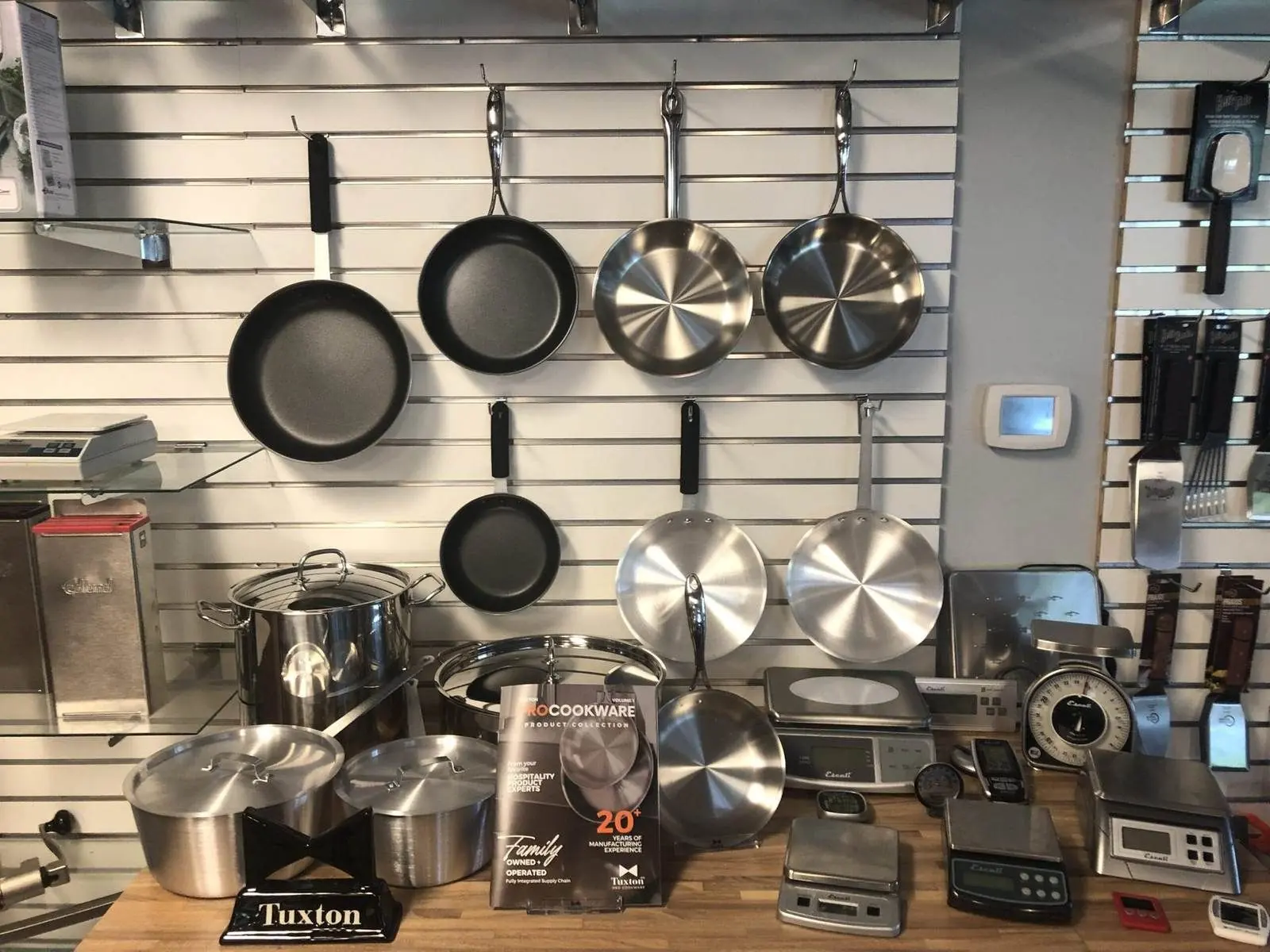
Walk the menu, not the catalog.
Take each dish and write down every item it touches between the walk-in and the pass. That produces a list your kitchen will actually use, instead of a starter kit with gaps in it. Our printable checklist is built exactly this way.
Buy depth where the menu demands it.
A sauté-heavy menu needs pans in multiples, not variety. Composed plates need plating tools in multiples so one lost spoon doesn't slow the pass. And order spares of everything that walks: tongs, scoops, and thermometers disappear first in every kitchen ever opened.
Gauge and construction decide the replacement cycle.
Sheet pans, storage containers, and shelving all come in tiers, and the cheap tier tends to warp, stain, or crack on a schedule. In a category you rebuy constantly, construction quality is the whole economic argument.
Storage and transport are part of the spec.
Containers, racks, and carts decide whether product stays organized, labeled, and off the floor — and whether clean ware makes it back to the line intact. Plan them with the kitchen, not after it.
Handle it before your dealer orders it.
Weight, balance, and grip don't come through on a spec sheet. Our showrooms hold the categories side by side so you can pick up the competing options and settle it in an afternoon.
Smallwares & cookware lines in the portfolio
Every line links to its page — coverage, categories, and the Zink team behind it. Or filter the whole portfolio by your state in the Product Portfolio.
Common questions.
How do we build a smallwares list for a new kitchen?
Walk the menu, not the catalog: every dish tells you what it needs prepped, cooked, held, and served. Our free opening-day smallwares checklist turns that walk into a list your dealer can price.
Why do cheaper pans and smallwares cost more over time?
Gauge and construction decide the replacement cycle. A heavier pan that lasts years costs less per service than a light one replaced every quarter — spend where the menu works the piece hardest.
Can we handle smallwares before the dealer orders them?
Yes. Handle the actual pieces in a culinary center — weight, balance, and stacking tell you things a photo can't. Then your dealer writes the order.
Bring your menu. We'll build the list.
Station by station, with the depth your service actually needs — worked out with your dealer, at no cost to you.
Keep exploring